Stories from Beneath the Water is the inaugural national participation of Panama at the 2023 Biennale Architettura. Developed as the Panama Pavilion, the project offers a counter-narrative to dominant Western imaginaries of the tropics—often framed as exotic, hostile, or incompatible with modernity—by positioning Panama as a site of historical entanglement, ecological transformation, and future possibility.
The exhibition examines three interrelated spatial conditions within the former Panama Canal Zone, addressing questions of division, erasure, and control: namely [1] the architectural and infrastructural systems introduced during the era of canal construction that institutionalized separation as a mechanism of governance; [2] the erased identities of communities displaced and submerged following the damming of the Chagres River and the creation of Gatún Lake; and [3] the island of Barro Colorado, critically examined as a case study for the Biennale’s theme Laboratory of the Future.
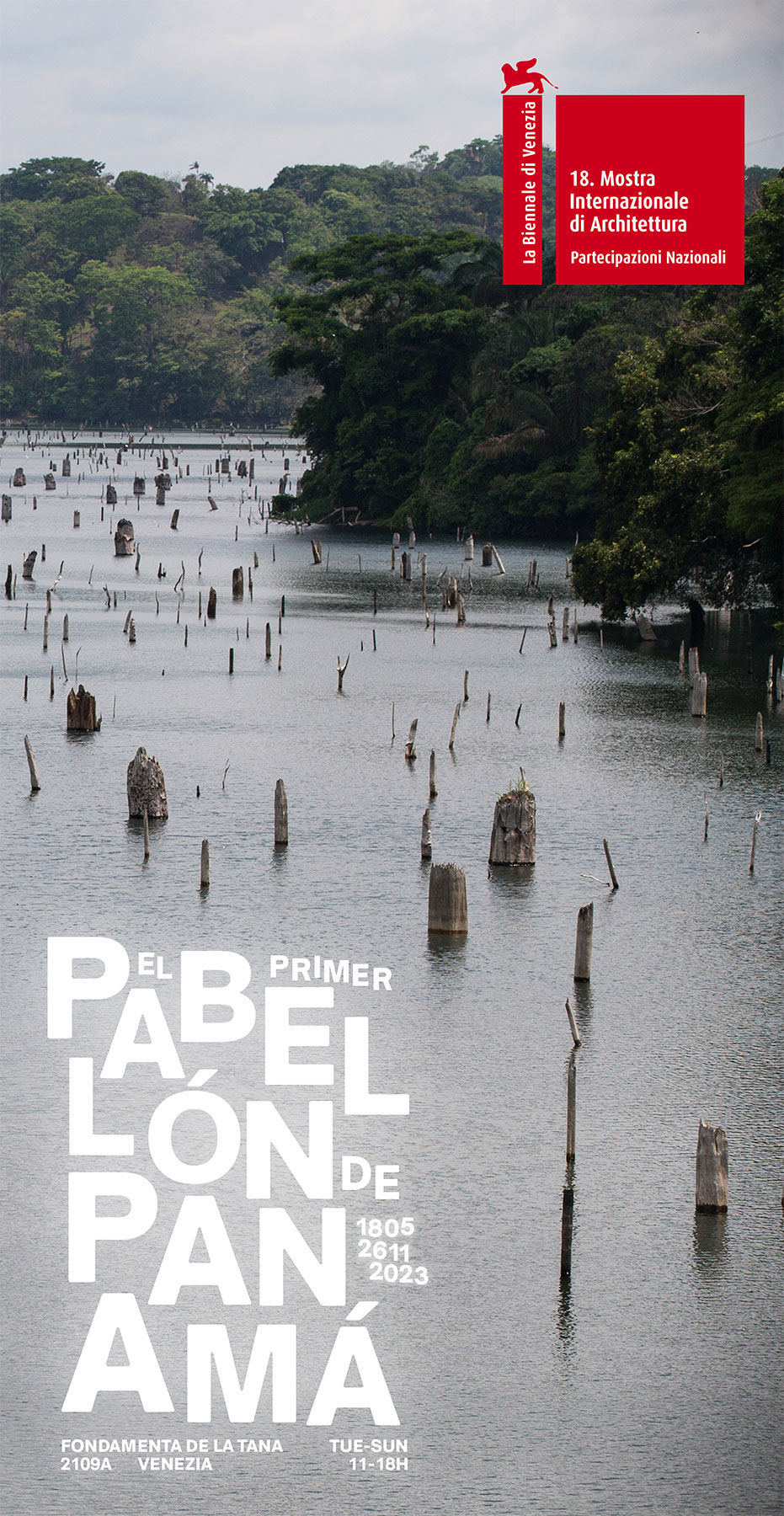
Panama Pavilion, Stories from Beneath the Water.
Video documentation, Stories from Beneath the Water
Section 1: Separation for control
For over 500 years, the isthmus of Panama—a narrow strip of land often described as the “land bridge between two oceans”—has held a position of geopolitical importance in global transportation and commerce. Since the arrival of the earliest European colonizers, Panamanian history has been shaped by recurring cycles of trade, extraction, and transit.
The first attempt was led by the French. With a death toll estimated at over 22,000 lives, largely caused by malaria and yellow fever, Panama was immortalized as a place of danger and disease. Following the failure of the French enterprise, the United States entered the newly formed nation of Panama with a distinct vision of imperial administration through the establishment of the Panama Canal Zone.
Less a traditional colony than an engineering enclave, the Canal Zone functioned as a ten-mile strip of land deliberately designed to stand in contrast to its surrounding natural and social environment, defining a landscape of modernity through infrastructural order.
Within these confines, an ideology of “othering” materialized through the demarcation of sanitized areas, the domestication of the jungle, racial segregation, and the systematic depopulation of the Zone from Panamanian communities and their cities. Conceived as a buffer of protection, the Canal Zone operated as an architectural structure that produced a liminal space.
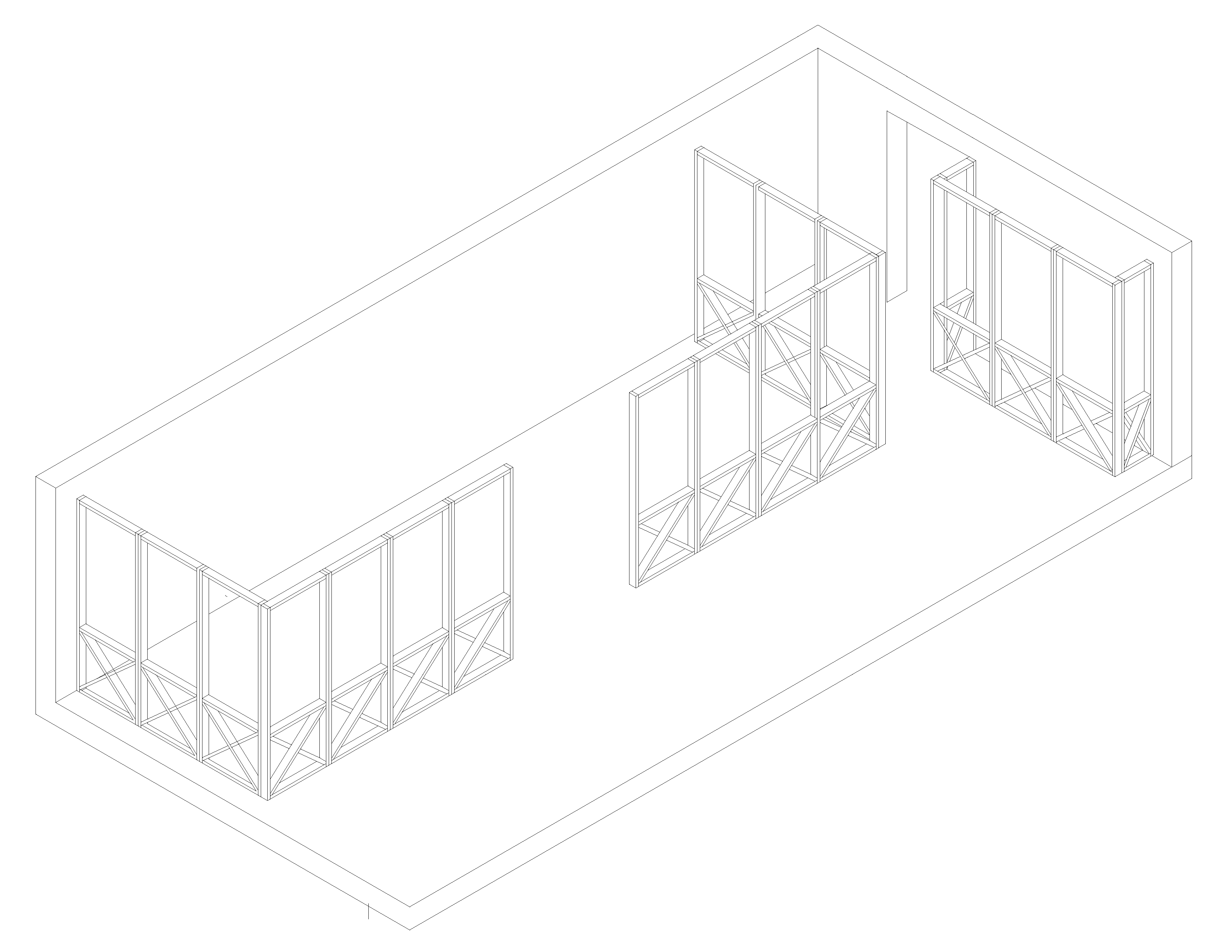
Isometric drawing, Space I: Separation for Control.
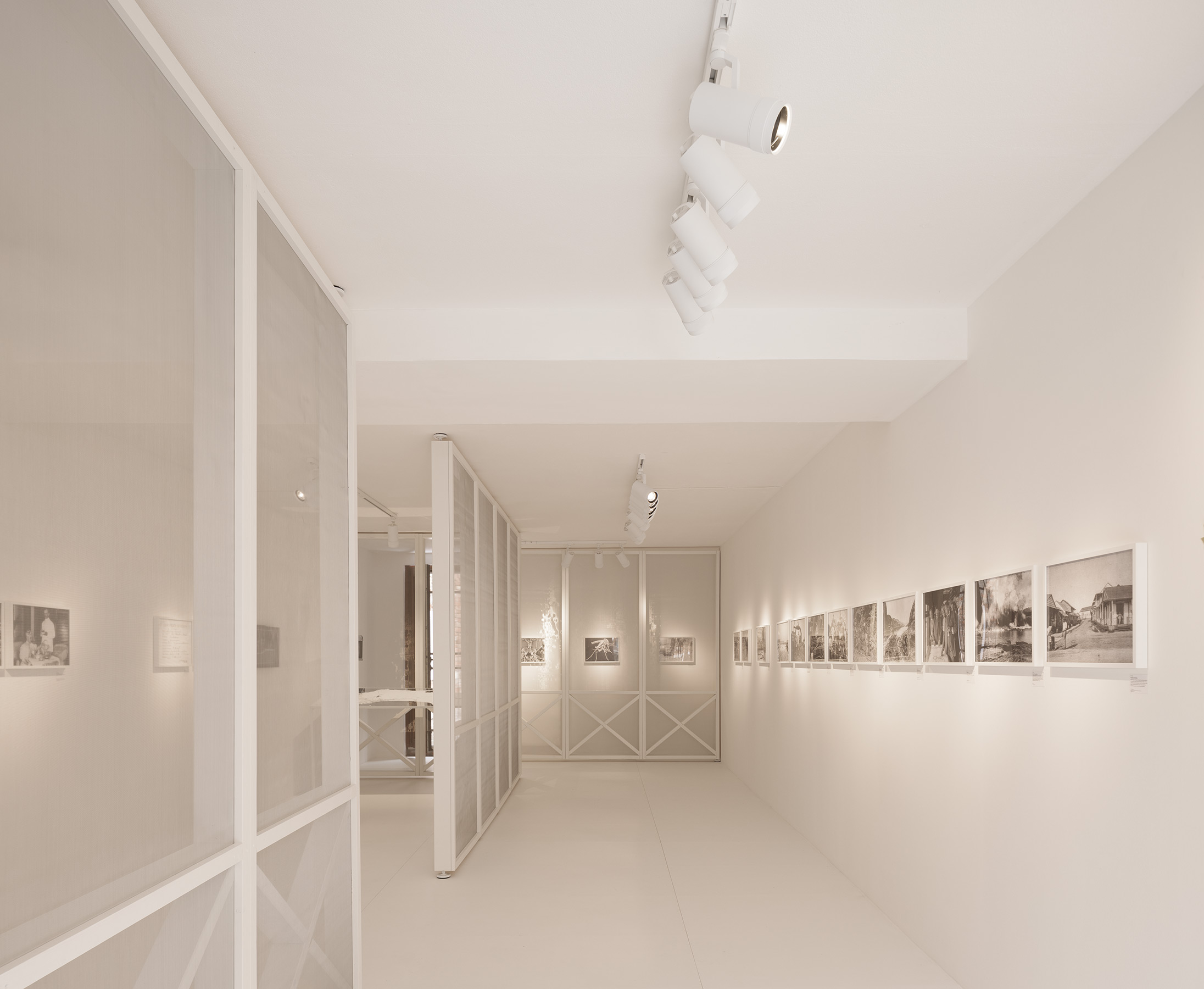
Installation view, Separation for Control.
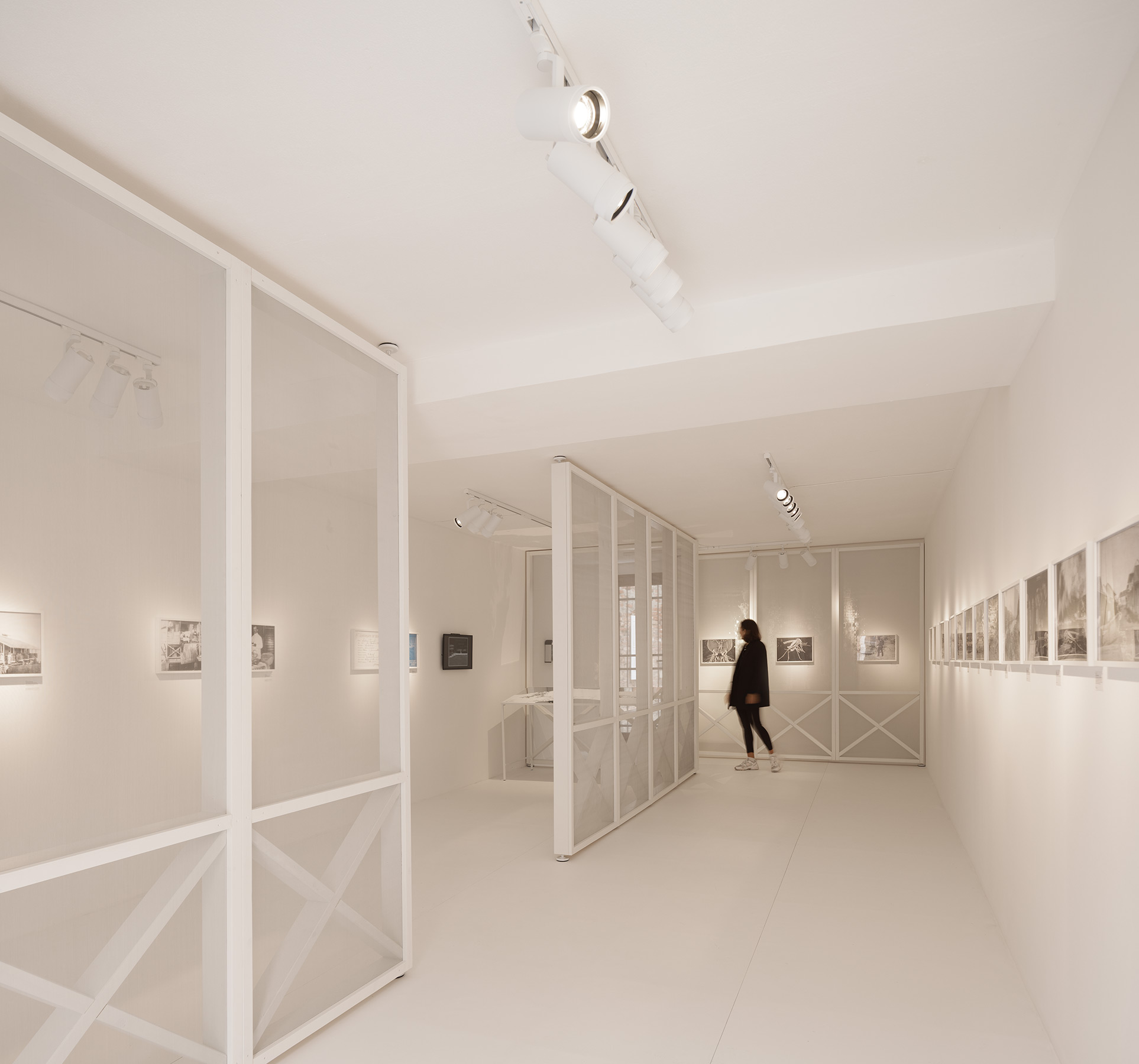
Installation view, Separation for Control.
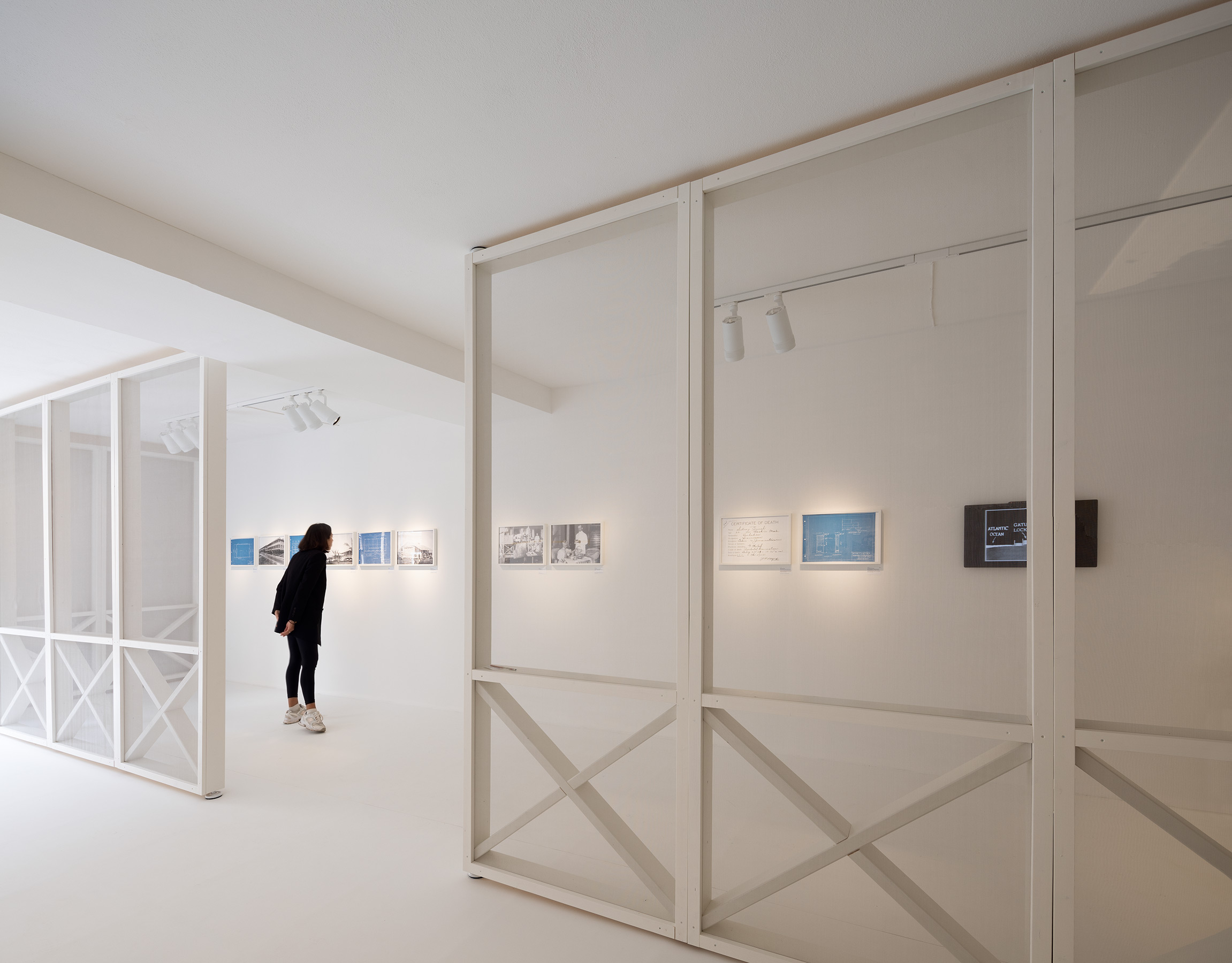
Installation view, Separation for Control.
Section 2: The magical walkway beneath the surface
Memories shape processes of self-identification and provide continuity between past, present, and future. They surface as allusions, echoes, and residual traces, producing layered meanings that inform the experience of architectural space. Within the context of the Panama Canal, the force of modernity—through its erasure of histories, landscapes, and Indigenous languages—displaced local Panamanian communities and consolidated a singular ideology of progress, order, and control.
The destruction of small towns, rural settlements, and historical landscapes generated a sense of nostalgia for environments that no longer exist, alongside a desire to preserve their image within collective memory. In Panamanian cultural production, landscape repeatedly emerges as a central medium through which memory, identity, and loss are negotiated, operating as a site where absence becomes perceptible.
The courtyard functions as a space of pause and reflection. Rather than confronting colonial trauma directly, it enables an indirect mode of engagement that resists both spectacle and romanticization. Trees recovered from beneath the artificial lakes of Panama are reintroduced into the pavilion, allowing visitors to encounter the material remnants of submerged landscapes and erased communities. Through this gesture, the walkway beneath the surface becomes a spatial device for engaging with memory, absence, and histories rendered invisible by the construction of the canal.
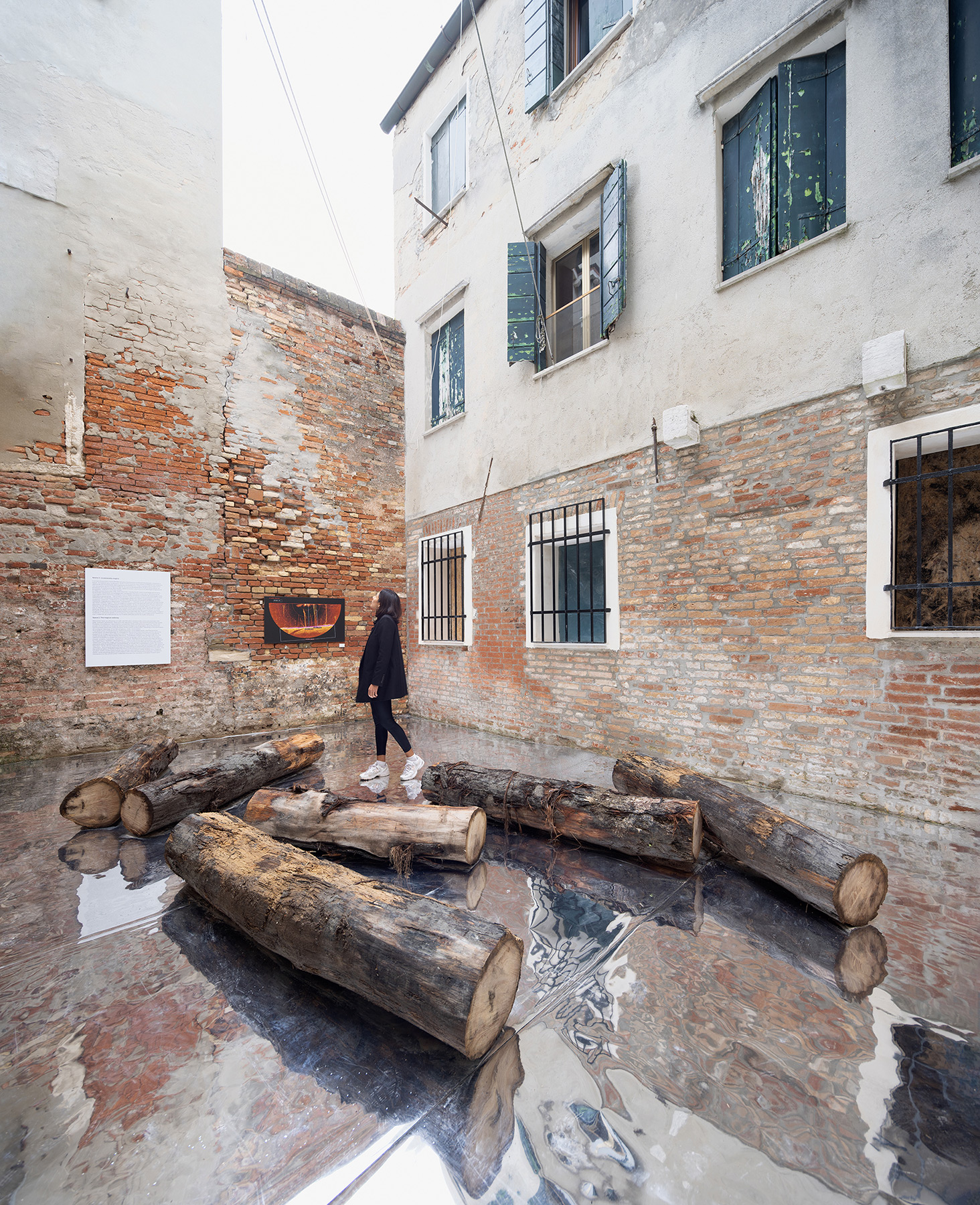
Installation view, The magical walkway beneath the surface.
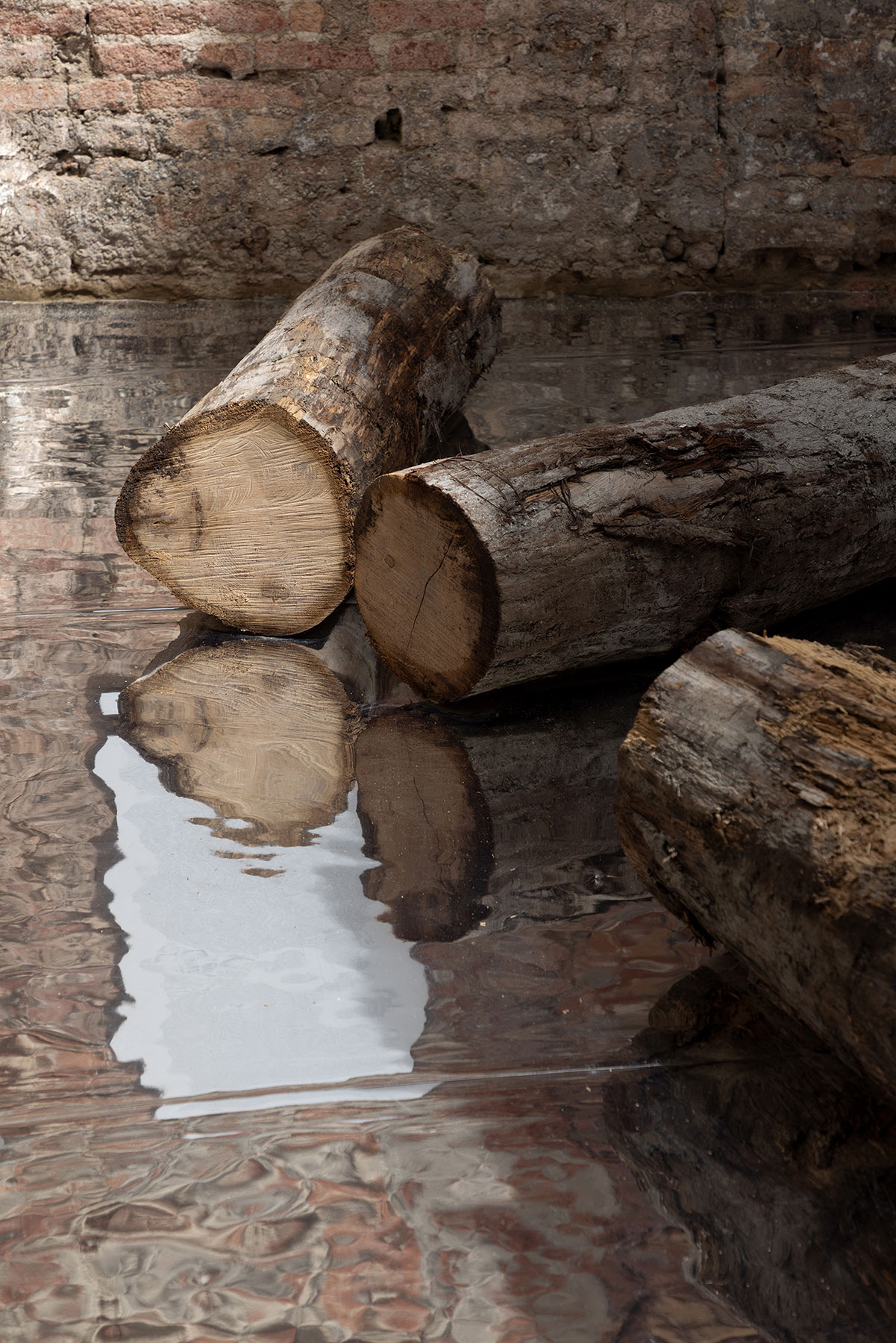
Detail, The magical walkway beneath the surface.
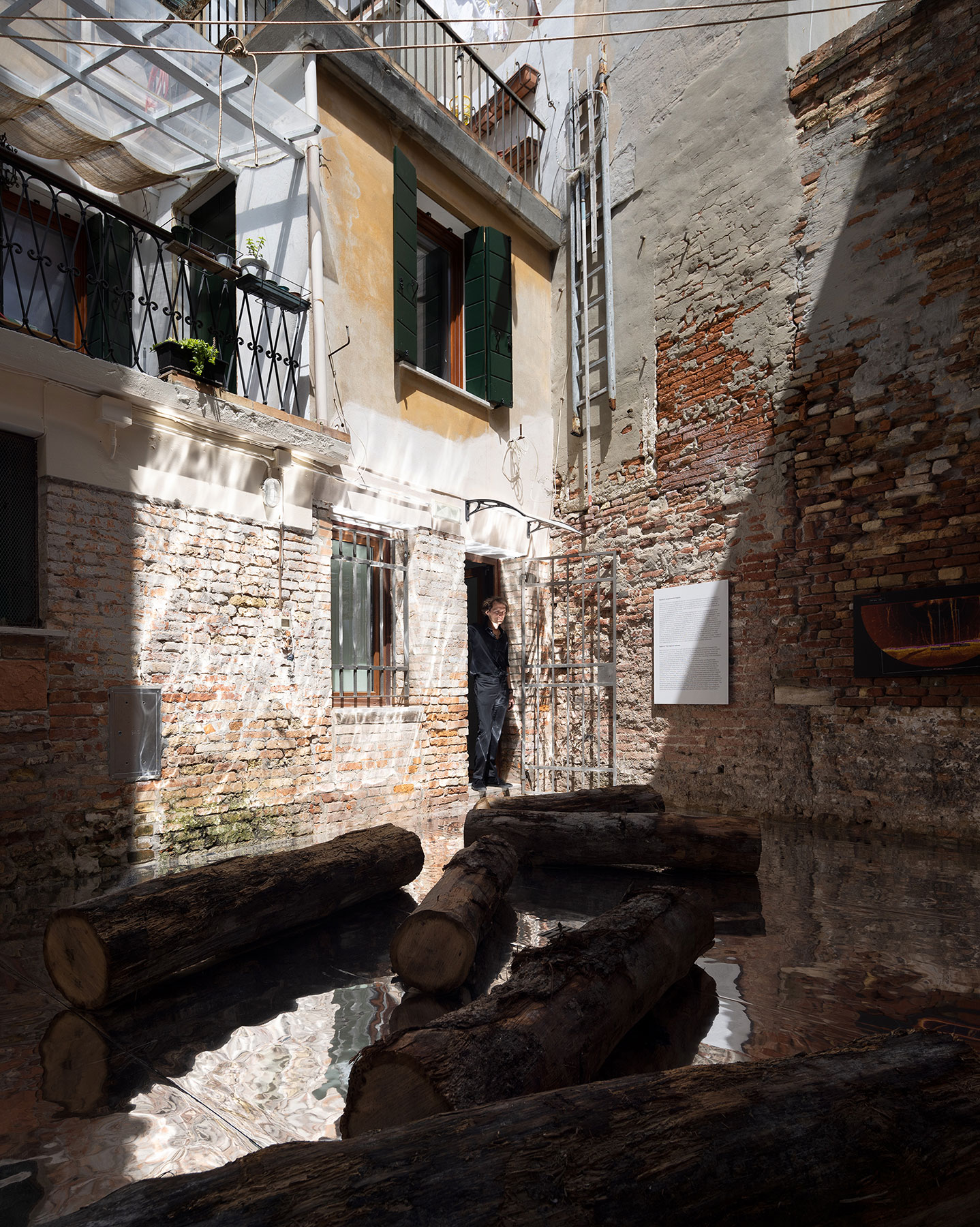
Installation view, The magical walkway beneath the surface.
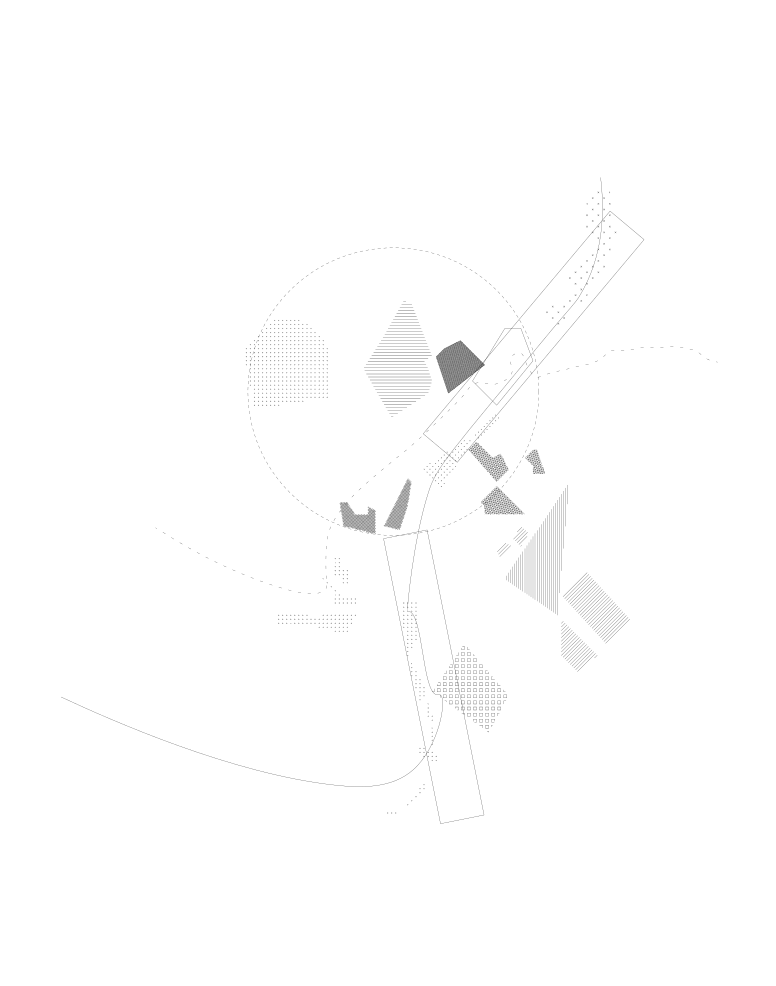
Cartographic analysis of the depopulated towns of the former Canal Zone: Gorgona, Nuevo Emperador, Balboa, Buena Vista, Empire and Ancón.
Section 3: Separation for protection
Barro Colorado Island is a singular site: a hilltop rendered insular when the waters of the Chagres River were dammed to create Gatún Lake, the main passage of the Panama Canal. Designated as a nature reserve by the Smithsonian Tropical Research Institute in 1923, the island has, over the past century, become the most studied tropical forest in the world.
Often described as a living scientific archive and laboratory, Barro Colorado Island occupies a dual position in which the landscape functions simultaneously as an object of study and as a repository of scientific knowledge. Positioned between competing imaginaries—as a fragment of “authentic” tropical nature at the crossroads of global circulation, and as a remnant of the former Canal Zone—this final section of the exhibition critically examines the histories, exclusions, and legacies embedded within this site.
Rather than offering definitive answers, the space invites a mode of listening and reflection. It foregrounds the tensions between protection and control, care and governance, and questions the role of scientific authority in shaping both local and global narratives of conservation. In doing so, it opens a speculative horizon for reimagining future relationships between science, modernity, and ecology in Panama and beyond.
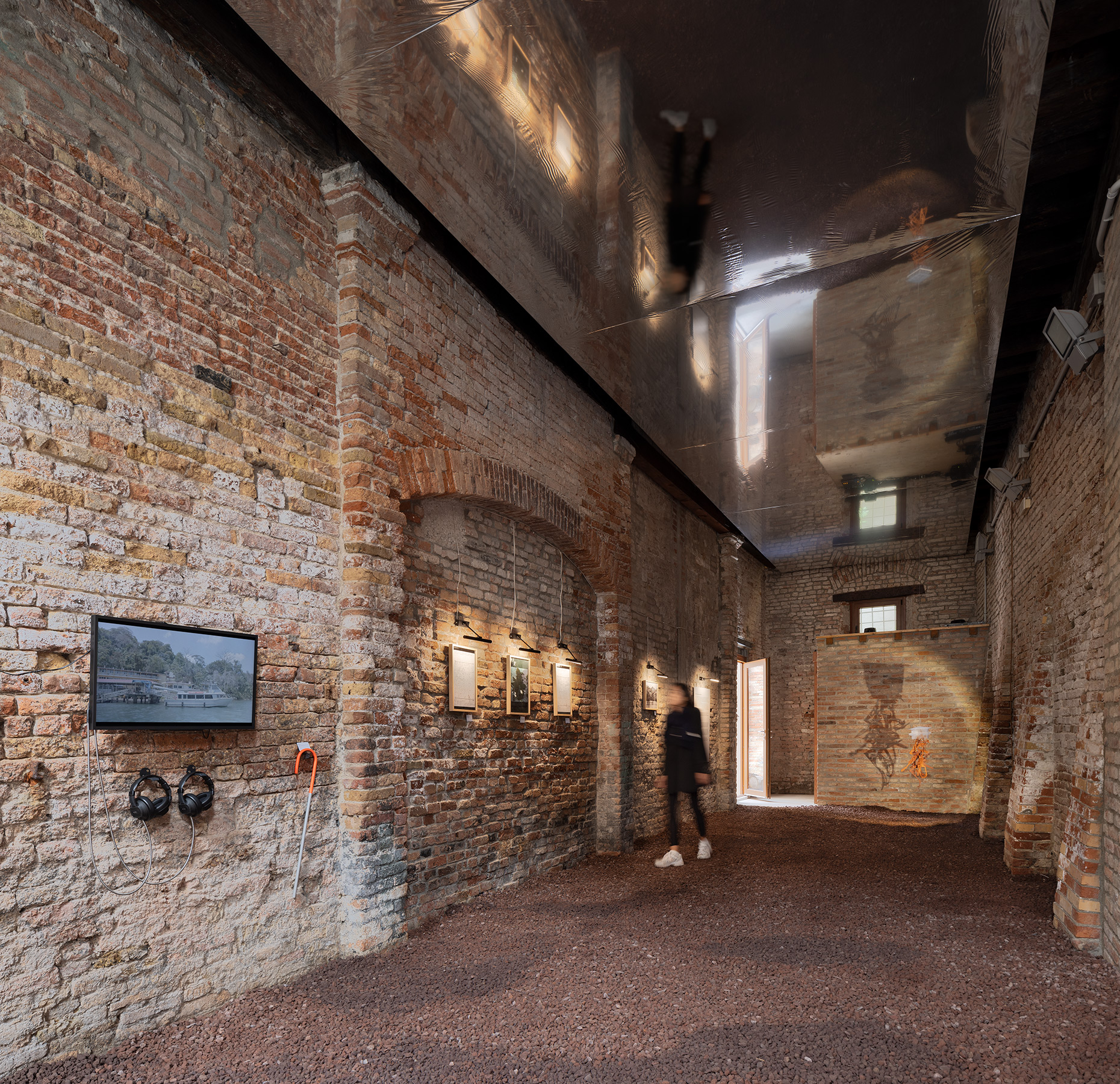
Installation view, Separation for protection.

Installation view, Separation for protection.
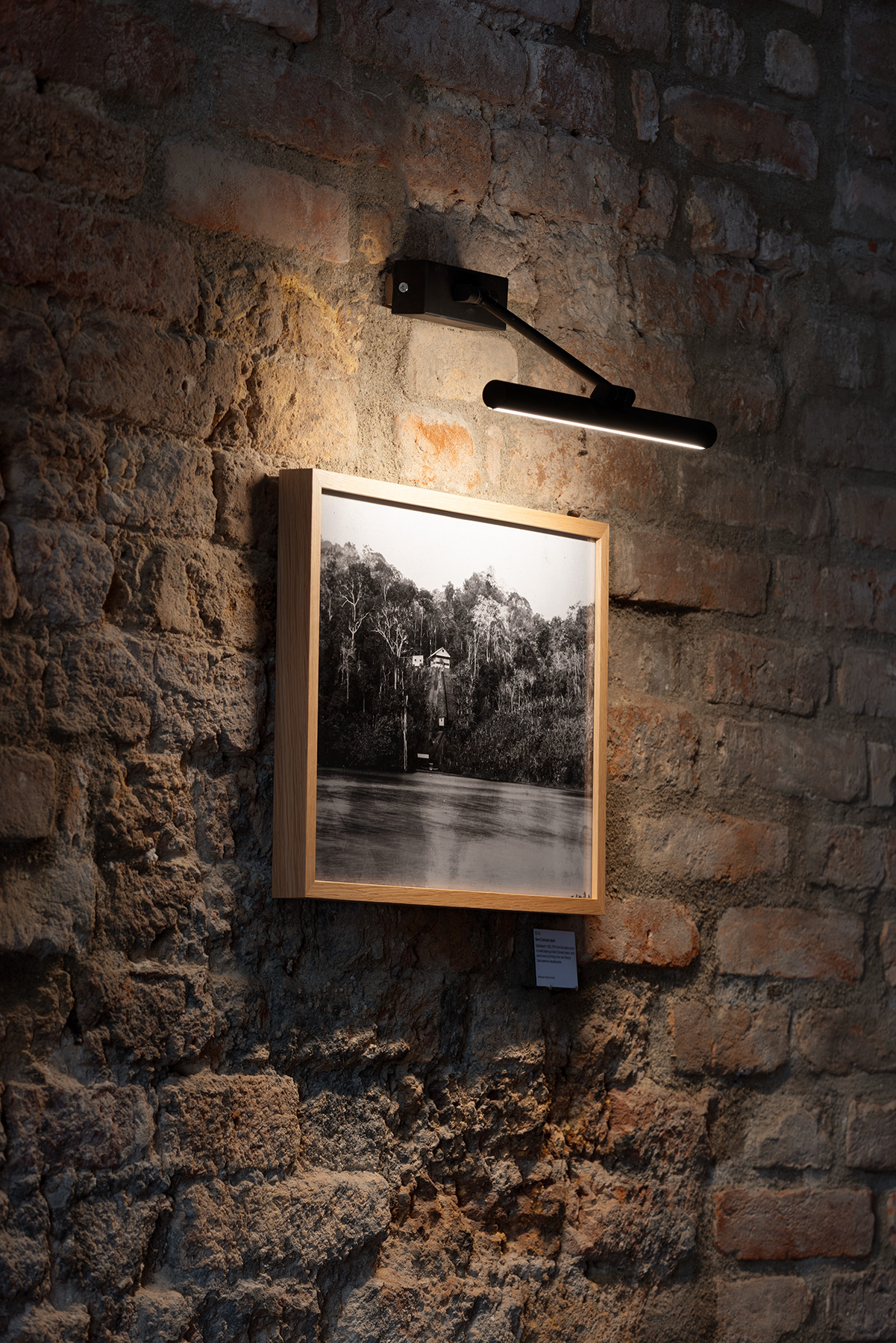
Installation view, Separation for protection.
Credits & Collaborators
Curator
Aimée Lam Tunon
Commissioner
Ministry of Culture of Panama
Participants / Research based on the works of
Marixa Lasso
Dante Furioso
Joan Flores Villalobos
Fahim Amir
Danilo Perez
Collaborators
Désirée Lam
Jasper Zehetgruber
Finn Steffens
Conrad Weise
Maik Stricker
Marda Zenawi
Photography
Studio Naaro
Videography
Valentin Duggon